
NAP Citations: What Local Citations Are and Which Ones Matter
Key takeaways
- A local citation is any mention of your business name, address and phone number on another website.
- There are four types: structured listings, unstructured mentions, data aggregators and industry or local sites.
- Citations carry less weight than they used to, so claim the major platforms first and keep every detail identical.
NAP citations are online mentions of your business name, address and phone number (NAP) on a directory, a map app or another website. When a customer finds your plumbing company on Yelp or Apple Maps, that listing is a citation.
Citations matter in local SEO because they show Google and customers that your business exists, where it is and how to reach it. They are one signal among several, alongside your Google Business Profile, reviews, links and the pages on your own site.
This guide covers what a citation is, the types you'll meet, whether they still move rankings, which ones to build first and how to build one correctly. If your listings already exist and disagree with each other, our guide to NAP consistency shows how to find and fix the mismatches.
01.What is a local citation?
A local citation is any online mention of your business name, address and phone number (NAP) on a site other than your own. Most are directory or app listings, such as Yelp or Apple Maps. A citation can also carry your website link, hours, categories and photos, but it doesn't have to.
The word comes from academic writing, where a citation points to a source. In local search, each mention points back to the same real business, so it confirms to search engines and customers that the business exists and shows its physical location.
Many citations carry no link, and that's fine. They still repeat your name, address and phone number where customers look. A citation can be a full profile you manage or a single line on a page you don't control, such as a chamber of commerce member list or a local news story.

02.Types of local citations
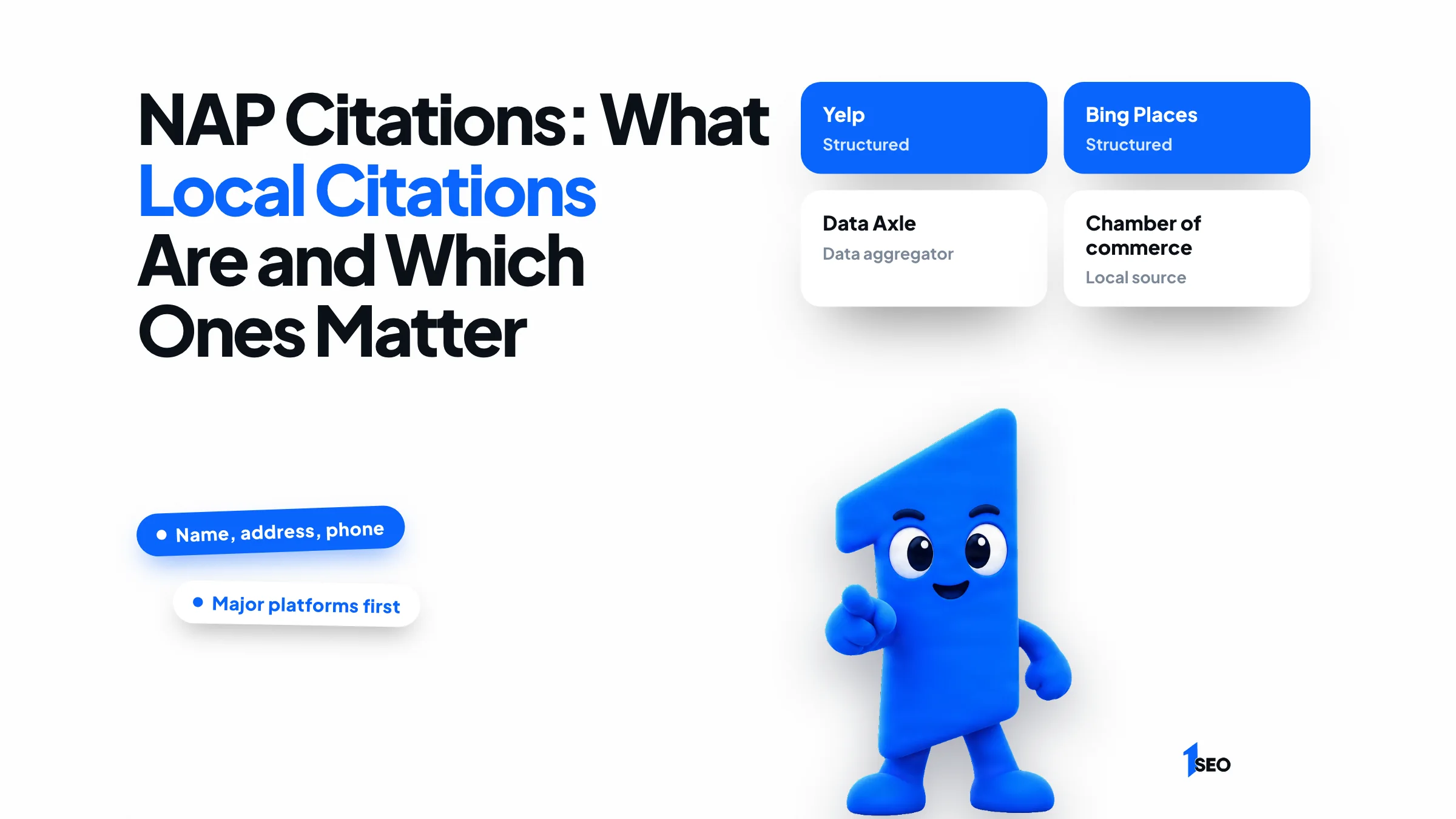
There are four groups. Structured citations are directory listings with set fields for name, address and phone. Unstructured citations are mentions inside articles, blog posts or news pages. Data aggregators collect business details and supply them to other sites. Industry and local sites, such as trade directories and chambers of commerce, form the fourth group.
Structured citations are the ones you create or claim: Yelp, Apple Maps, Bing Places and similar directories, plus social media profiles such as Facebook.
Unstructured citations are mentions you can't fill in a form for. Think of a news story about your grand opening, a blog post listing local contractors or a sponsor page for the youth league you support. They come from real activity and outreach.
Data aggregators collect business data and supply it to other sites and apps. The Whitespark ranking factors survey tracks consistency on data aggregators as its own ranking factor.
Industry and local citations sit on sites for your trade, like a legal directory for a lawyer, or on city and state sites, like a chamber of commerce. They tell Google and customers that you belong to your field and your area.
| Type | Example | Who controls it |
|---|---|---|
| Structured | Yelp, Apple Maps, Bing Places | You, by claiming or creating the listing |
| Unstructured | News story, blog list of local contractors | The publisher |
| Data aggregator | A company that collects business data and passes it to other sites | The aggregator, which feeds other sites |
| Industry or local | Trade directory, chamber of commerce | You or the organization |
03.Do local citations still matter for SEO?
Local citations matter less than they used to, but accuracy still counts. In Whitespark's 2026 Local Search Ranking Factors report, citations lost about half a percentage point, continuing a downward trend. Consistency of citations on the primary search engines ranks 28th among local pack and Maps factors.
Google's own local ranking help page names links and reviews as inputs to prominence, and it doesn't list citations. So treat them as groundwork, not as the main driver. Reviews, a complete Business Profile and good pages on your own site come first.
The experts in that report don't fully agree. Brian Barwig of Sterling Sky says most other citations are still worthless, yet adds that citations on the major sources for your niche seem to help a bit with getting into AI Overviews.
Citations also help customers directly. Customers can see your Apple Maps or Yelp listing, so it works as a marketing surface as well as a ranking input.
04.Which citations should you build first?
Start with the platforms customers use to find you: Google Business Profile, Apple Maps, Bing Places and Yelp. Then add two or three directories for your trade, your chamber of commerce and any local association. A few accurate listings on sites people actually visit work better than a long list on directories nobody opens.
Apple lets you claim your location on Maps through Apple Business and control your logo, hours, images and key details. Yelp says it's free to be on Yelp, and you can claim your page at no cost. The Better Business Bureau separates its business profile from accreditation, and accredited businesses pay annual dues.
Say a plumber in Tulsa builds this list:
- Google Business Profile, Apple Maps, Bing Places
- Yelp and Facebook
- Two or three directories for home services
- The local chamber of commerce
A dentist would swap the home services directories for the medical and dental directories patients use to check credentials. Our US business listing sites resource lists more sources by type.
05.How do you build a citation correctly?
Claim or create the listing, then enter your details exactly as they appear on your Google Business Profile. Pick the most accurate category, add your hours and website, and verify ownership if the site asks. Save the login so you can update the listing later.
Accurate NAP information is the core of every listing, so copy your business information from one source of truth. Use the name your customers see on your sign. Google's profile guidelines say the name should reflect your real-world name and leave out marketing taglines, phone numbers and website URLs. Follow the same rule on every directory.
Add photos and a short, plain description where the site allows it. A complete listing lets customers check your hours and website before they call.
If your existing listings already disagree with each other, fix them using our guide to NAP consistency. If you'd rather hand the work off, see our local citation building service.
Conclusion
Claim the main platforms first and keep every detail identical. If you want a second pair of eyes, ask us for a free local SEO audit.
Frequently asked questions
What does NAP stand for?+
Are citations the same as backlinks?+
How many citations does a local business need?+
Can I pay someone to build citations?+
Keep going
What to read next
Sources & references
About the author
